Multiple Stakeholder Risks
MULTIPLE STAKEHOLDER RISKS
23 November 2018
STAKEHOLDERS – one of the biggest risks of live events, large or small, with multiple stakeholders is… the multiple stakeholders. A risk frequently overlooked and often seen as a non-issue, only for it to become ’the’ issue. Unlike hiring an agency or supplier, the looser arrangements typically used to engage stakeholders, coupled with inevitable changing requirements, a fixed deadline and having everyone watching, creates unique pressures that can erode enthusiasm, leaving you exposed. Contracts and agreements are not the answer, they are just the start. 5 minutes of video to help…

VIDEO TRANSCRIPT:
Hi, I’m Will Glendinning, I’m a live event producer, director and designer.
Now whether it’s a sports event, arts festival, public event a major conference or summit or such like, you’re going to be reliant on multiple stakeholders and whether you like it or not, you may or may not have complete control over them. Key stakeholders could be internal departments, local authorities, media partners, community groups, a board or senior officials, anyone your live event simply wouldn’t be possible without.
If your live event is new to any stakeholders, or if it’s in a new location or a one off, one of the main risks of multiple stakeholder events is making sure these key stakeholders can and will actually deliver. It still amazes me how often this risk is left wide open and, frequently, unknowingly. I’ve lost track of the number of times I’m told stakeholder delivery is a non-issue or low risk, for it to then prove to be the issue.
If you appoint an agency or supplier to help deliver your live event, you or your team will probably apply considerable due diligence before appointing them. What can they deliver? How will they deliver? What expertise and experience do they have? How much will it cost? You know, important questions. Do you apply this same level of due diligence though to all stakeholders? Stakeholders you’re just as reliant on as any supplier or any agency.
Some key stakeholders are typically involved because they want to support you, they are the enthusiastic ones. Some are obliged to support you making them more generally apathetic ones. And some have been told to support you, they’re typically more reluctant stakeholders.
Given you have these stakeholders supporting you though, which probably involved a great deal of leg work, diplomacy and good will in the first place, why risk rocking the boat by asking too many questions? I often get told not to worry, because key stakeholders are experts in their fields, or someone somewhere has developed a lovely list of roles and responsibilities detailing what all these stakeholders will do. Leading everyone involved to believe everything’s fine. Two points there.
Firstly, a person or organisation who’s an expert in their field in normal circumstances can rapidly fall to pieces when working on a live event. With goal posts constantly moving, having an absolutely fixed deadline and with everyone watching; all of which can play havoc with logic, egos and the emotions of those involved; unless that is they have comparable experience.
Secondly at the outset of a live events development, roles and responsibilities are, at best, ambiguous, given how much will change and the detail yet to be explored. And perhaps more importantly, and more commonly, an owner or leader promising the goods, services and support of their organisation is very different to those in the organisation actually being able to deliver. You need to apply the same due diligence to all stakeholders just as you would any supplier or to any agency.
Now these stakeholders are here to help you, they want to support you. So you don’t want to antagonise them, you just need to have some empathy and want to support them. For each stakeholder, check their capability to do what will likely be needed. Have they the capacity to deliver? Have they directly comparable experience of having delivered similar under the similar pressures a live event will present? And, if applicable, what will it cost you in time, money or other compensation? Then, for each type of stakeholder, be aware of the following too:
Firstly, the enthusiastic ones: Ironically these are often the riskiest stakeholders. Many people are often super excited about being involved at the outset of a shiny new event. Enthusiasm, positivity and supportive endorsements or rhetoric can mask or skew reality though. Enthusiasm does not equal capability, capacity or expertise.
Secondly, the apathetic ones: These are usually the easiest stakeholders to manage and will normally be the stakeholders who’ve seen and done it all before. Just check though that they’ll be doing what you actually want them to do, rather than what they think you want.
Finally, the reluctant ones: These are the stakeholders who’ve been crowbarred into your event or volunteered to help, and they need your most empathetic support. Find out what they’re most concerned about and what they are not telling you. Until you know this, you’re exposed and at risk. Any reluctance will not reduce as your events development progress, it will only escalate.
Once you’ve done all that, you’ll have a far clearer version of reality than any roles and responsibility analysis will ever give you. And once you’ve done that, you need to assume that every stakeholder may fail and hope they don’t rather than vice versa. And then you, your team, an external agency if you’re outsourcing things, or potentially additional stakeholders, can fill the gaps that look like they exist, support stakeholders where comparable experience, expertise or provision is lacking, or put in place contingency plans if needed.
This is the surest way to make sure you don’t end up in a mess as everything that were enthusiastically promised gradually evaporates as that enthusiasm wavers. And perhaps, more importantly, the clarity this brings you you’ll get more sleep too, which is important.
Anyway, I hope this was helpful.
If you’ve got any questions just drop me a line and I’ll speak to you again soon.


Live Event Blueprints
LIVE EVENT BLUEPRINT VIDEOS
16 November 2018
I spend so much of my time advising and guiding brands, governments and marketing, arts, entertainment and sports organisations, that I decided to commit some of the most common, useful or interesting advice to the interweb for everyone to benefit from. If you’re interested in qualified and authoritative guidance on creating, procuring or producing anything live event related, these videos are for you. If you’ve any queries or subjects you’d like me to look at – drop me a line.
VIDEO TRANSCRIPT:
Hi, I’m Will Glendinning. I’m a live event producer, director and designer, and I’ve been responsible for some of the most ambitious live events, campaigns and entertainment in recent history.
I operate internationally and have worked with countless global brands, charities, the Olympics, Tour de France, world leaders, military, major events, cultural festivals, all sorts of things.
This breadth and depth of experience and my ability to clarify and lead anything live is often why I’ve become the expert who the experts turn to, which is great, and I love it.
However, I see people often grappling with similar event-related struggles and frequently having similar queries. So, I thought I’d start providing some qualified and useful guidance in a few videos for anyone to use.
I work with pretty much every type and every flavour of live event, every scale and for every purpose. So, if you work in a brand, government, not-for-profit or marketing organisation, or in the arts, entertainment or sport and have anything you’d like me to explore or clarify with regard to creating, procuring or producing live events, just let me know and I’ll put a video together of the most interesting or common requests.
I hope I can help, and I’ll speak to you soon.
What Is The Meaning Of Life?
THE MEANING OF LIFE
14 November 2018
The meaning of life revealed! Well…according to me anyway.
Back With Humpbacks
BACK WITH HUMPBACKS
19 August 2018
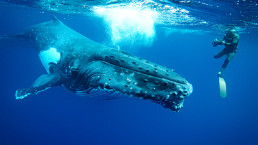
Freediving with humpback whales in Antarctica back in 2016 was epic, though the visibility less so.
Off to clearer waters to track down some of these majestic 50’ (16m) creatures to freedive and dance with.
Best viewed in HD, loud and ideally with headphones for a full at-one-with-nature immersion.
Enjoy.
The Freedive Antarctica film can be found by clicking here.

Chasing Storms
CHASING STORMS
29 May 2018
I spend much of my life creating spectacles to sell stuff or entertain people. Nature though creates spectacles more incredible than could ever be created artificially. Tornadoes are one of the most powerful forces of nature and have always fascinated me. In May, I fulfilled an ambition to chase severe, yet breathtakingly beautiful weather across the USA. Would a tornado appear though in a year that’s seen the fewest of them in decades?
Video best viewed large, in HD and loud.

New Zealand Heliboarding
NEW ZEALAND HELIBOARDING
3 September 2017
A short (‘micro’ even) expedition to New Zealand for a couple of days heliboarding around Mount Aspiring and New Zealand’s tallest mountain: Mount Cook. Which was all pretty fabulous. Best played loud:

Flexible Working
There was a time a few years back when I had an office full of mothers working for me. This wasn’t by design, it just kind of happened. Nonetheless, someone once asked me what the benefit of working mums was to my business. In short:
1. They’ve zero interest in office politics - they’ve more important things to do.
2. They don’t take or give any bullshit.
3. They’ve a level of efficiency even German engineers can only dream of . . . after all, Monkey Magic starts when it starts, and there’s no way a mother is ever going to miss a Monkey Magic session with her child!
I’d forgotten about this period of mum-filled office life, until one of those mums decided to go and use it as a shining example of how flexible working for working mums should be and wrote a fabulous article (and frankly - what article featuring me wouldn’t be fabulous . . . if only for my ego??) - so: Zoe, thanks lots.
Interested in flexible working? Zoe's article, her article in full (reproduced with her permission):
- - -
With little support for mothers in the workplace, it is little wonder that when women start having families their career and their finances suffer irrecoverable damage.
The only route for many mothers is to either set up their own business or take a break while they have their children and go back to a lower paid role.
The estimated 427,000 women currently on career breaks, 249,000 (three in five) are likely to come back into lower skilled, lower paid roles. Women Returners survey - November 2016.
I want to take you back to 2009, I was 29 and unexpectedly pregnant. My thoughts were:
“Oh my god, soon I am going to have a child to support - I need to sort out my financial life so I can feed and house my child”
The panic really set in - who on earth is going to give a job to a pregnant woman?
Plus even if I did get a job after my maternity, how on earth would I work in a 9-5 job and be the mother I wanted to be?
In the UK most employers expected to work obligatory overtime, coupled with the two hours commute to work and back, the normal amount of time away from your home is often 11 or 12 hours.
How on earth was I supposed to do this? Yes there are nursery’s but I certainly didn’t want my child to be in one from 8-6. Plus if I went on this road of working from 9-5, what happened when my child started primary school? I wanted to be the person who picked her up from school and who took her in. Unless I could find an employer who would allow me to arrive to work at 10am and finish at 2.20pm which was unlikely.
I had little choice but to set up a small business that I could easily manage from home and so I started booking performers for events and parties. It was work that I could do at home and I could fit around my baby’s routine.
However I became isolated and although I had plenty of mummy groups and mum friends, I did not have any camaraderie at work and was alone for the majority of the time.
Starting something new in an industry I did not already have connections in was really tough.
I had a new baby and I was 100% breastfeeding, going out networking was impossible.
When my baby was 5 months old my husband almost died from a rare heart condition.
3 weeks he spent in intensive care and when he returned home from the hospital he was so weak he really couldn’t do much.
Suddenly I wasn’t just the main carer for my baby I was also a carer for my husband. I was the main bread winner, earning an income from my laptop at home. I used to answer the work phone in my living room praying my feeding baby wouldn’t cry or make a sound. It was a hugely stress-full time.
A year later I negotiated a long contract, highly paid job on the Olympics with the most mum friendly boss ever - Will Glendinning. Will, truly understood the power of flexible working and the majority of the team who worked with Will on the Olympics were mums. Will, didn’t worry about what time or where the work was done, he gave his team trust and respect and in return gained a hardworking team who respected him greatly. I learnt a lot about management working with Will and Rachel (Dulai) in 2012, I also saw that flexible working worked well not just for the mums, but it worked well for the business.
Mums have a laser sharp vision to get to the route of the of the problem and deliver good quality work in a short amount of time. They know their time is precious and limited, so they do not waste time.
Shortly after finishing on the Olympics, I interviewed for a large well known agency. I had a good CV and good relevant experience, however during the interview I was asked how old my baby was and whether I intended on having more children. I came out of that interview feeling deflated and questioning whether I should have hidden the fact I had a child. Unsurprisingly they did not call me to work for them. It’s really hard to prove discrimination, but this was almost certainly my experience of it.
There are many stories such as mine, mothers who were in good jobs but have suffered discrimination while pregnant or afterwards with the responsibilities that come with raising a young family. It is little wonder the statistics on gender equality in the workplace are so stark:
Hilly James reports in the Sunday Times (5th February 2017) :
“men and women enter professions in equal numbers, but women comprise of only 40% of middle managers, 20% at senior levels and less than half of that figure in CEO positions.”
Major banks such as UBS, LLoyds, Natwest have put in place major initiative and schemes to retain women in their own workforces as the numbers are so low.
When women get to the age of being considered for senior management and CEO positions, many are starting a family.
There is little choice, they can either put off having a family until they are much older, or they can choose starting a family when they want to, however choosing the latter is detrimental to one’s earning ability in the present and in the future.

SKY NEWS FREEDIVE ANTARCTICA INTERVIEW
SKY NEWS FREEDIVE ANTARCTICA INTERVIEW
17 April 2016
Sky News put a great film together about our Freedive Antarctica expedition and I then gave a short interview.
As probably the first Brits to freedive in Antarctica (we can only find about 10 people that have ever freedived there), Sky News proudly proclaimed us as having made history…
VIDEO TRANSCRIPT:
Three men have become the first British people to free dive in Antarctica, braving the freezing water to swim beneath the ice simply by holding their breath.
They recorded their trip under the murky iceberg, seeing things never seen before, and gave Sky News the first look at it. Sky’s Rebecca William’s reports.
It took two years to plan and it’s an incredible feat. Three men, all from Britain, are believed to be the first to free dive in Antarctica in bitterly cold temperatures. Along the way they documented their trip.
It’s night time again and we’ve been sailing across Drake Passage for a day and a bit now. We’re partly making sure the boat stays on course, but also looking out for icebergs. Quite hard to see in the dead of night. Which is why we got this device, I’ll turn this cam around and show you. Our radar.
At night they sailed much of the journey in thick fog. But the views in daylight made it all worthwhile. Filming their entire journey, these pictures give a rare insight into life in Antarctica. Whales and seals swimming nearby, even photo opportunities with penguins. And all this, under sea ice in the Antarctic. The men decided to free dive, which meant they had to hold their breath underwater for minutes at a time, rather than using breathing equipment. It causes less disruption, allowing them to get closer to the wildlife. But it can also be incredibly dangerous, with many blacking out before they resurface. Even the Russian champion Natalia Molchanova is believed to have died following a dive she carried out in Ibiza last year.
It’s probably in competitions where people are maybe going for extreme dives that it would be slightly pushing their limits. But again you’re doing it in a safe environment, you’ve got safety divers there who are there to rescue you should anything go wrong.
The group traveled to Antarctica for three weeks in this specially designed boat. At times the only sound was from the relentless winds, or the music they played to keep their spirits up. So many pictures, so many memories. These three men have now made history. Rebecca William’s Sky News.
And one of those history-makers, Will Glendinning, member of the expedition you saw in that film is with us now. Amazing. Amazing shots and pictures there. I mean, views that we’d all like to see, but not many of us would like to go to the length that you had to go to.
It was incredible, I mean, we tried so hard to put it into words, when we were traveling back on the boat. Trying like I had to sum it up, I mean, it’s so hard to put it into words. The pictures don’t really do it justice, it was that amazing. Yeah.
Question for you. How long can you hold your breath for?
The longest I’ve bothered trying about five and a half minutes.
Five and a half minutes?
Yeah, but that’s when you’re just in the water not doing much. When you’re actually free diving you’re moving, using energy, and that’s therefore much less. Sort of two, three minutes at the most, I’d guess.
Very dangerous. I mean, first of all, free diving. Holding your breath for, say, roughly around two minutes, but doing that under ice.
Yeah, I mean, I suppose it looks more dangerous than it is. It’s all quite carefully measured and calculated, and we look at things before we do it, work at how to get in and out. We don’t take that many sort of uncalculated risks, it’s all quite slowly and methodically thought through.
Looks pretty dangerous to me.
When you’re underwater, though, can you really appreciate the beauty of what is down there, or is it only when you’re above the surface that you can actually sit back and say wow that was incredibly stunning?
It depends on what you’re looking at. I mean, in Antarctica the whole story is about the ice, and the ice formations, and the ice caves that we saw. It was just beautiful. And yeah, free diving is about as fish like as you can be without actually being a fish, I guess, and it’s just – it’s calm. It’s stunning. It’s beautiful. And you do take it in. It’s pretty incredible.
But the fish are meant to do this. That’s why they have gills. We don’t, do we?
Well we all came from fish originally. I mean, no we don’t have gills, but I guess it’s quite womb-like. It’s relaxing, it’s calm. It’s just such a beautiful place.
And this is purely for, is it seeking a thrill? Why do you do it?
I’d love to say that it was a big noble aim, I mean, it was, I’m much happier in water I think than I am on land, exploring water by free diving is the most natural way of doing it. And it’s just, it’s beautiful, it’s tranquil, it is, I know it doesn’t look it, but it’s quite a calm pursuit. I guess it’s the watery equivalent of yoga.
And what stands out for you for the whole trip? So I read that you think three weeks was too short. You wanna rush back.
It’s criminally short. Yes.
What stands out for you as the kind of abiding memory from that experience?
We went there thinking everything was gonna be about the wildlife. The penguins, the whales, the seals, and all of that. And that was there, but the real story was the environment. It was like being in the world’s biggest sculpture park. I mean, everywhere you went there was another beautiful bit of scenery, or bit of ice, or another sculpture underwater, above water. It was constant. Every minute we’d turn around and see something new and beautiful. It was just relentless.
That shot behind you that we’re showing now, is just gorgeous. Absolutely still, that water, isn’t it? Absolutely beautiful.
Mirror flat.
Will Glendinning, thank you for coming and sharing your shots with us, and your experience. Good to see you. And you’ll be out there soon, I’m sure.
I’d love to go back.
Thank you very much. Still to come, on Sunrise…
FREEDIVE ANTARCTICA - THE FILM
FREEDIVE ANTARCTICA – THE FILM
15 April 2016
We’re back.
Wow!
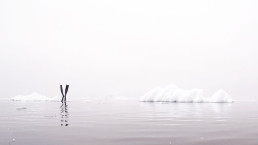
Having been planning our Freedive Antarctica expedition for almost two years, we had all sorts of expectations. Nothing prepared us for the experience.
An amazing place – above and below the water. Brutal and beautiful in equal measure.
Words, pictures, video don’t do the expedition justice. In an attempt to convey what we experienced though – I produced this short film…
…and we made the news! Click here to find out more.
…and visit the official expedition website here.

FREEDIVE ANTARCTICA 2016
FREEDIVING EXPEDITION TO ANTARCTICA
I’m off on another adventure. To Antarctica.
Over a year in the planning, on 16 February 2016, T.F.B., Dave Crump and I will, along with tour boat’s crew, set sail from Cape Horn aboard the 54′ steel-hulled ‘Pelagic’ sailing vessel for three weeks.
We’ll cross the unforgiving Southern Ocean heading to Antarctica. Once at the Antarctic peninsular we’ll head as far south as the weather and ice permit – the target being 70 degrees south – the 70th parallel.
Why? The chance to sail, silently, through breathtaking scenery. The chance to freedive the depths of never before seen underwater cathedrals of ice. The chance to swim and freedive with Antarctica’s wildlife.
Penguins, leopard seals, humpback whales, maybe orca and more beckon!
Find out more at: Freedive Antarcitca